• Home
  • About & Contact
  • Restaurant Reviews
  • Product Reviews
  • SHOP
instagram twitter

The Graphic Foodie | Brighton Food Blog & Restaurant Reviews


Most people are familiar with the adopted American version of this meatloaf but few will have come across the Italian polpettone, which translates as "giant meatball"! This is a classic Sicilian dish, really family friendly and is easy to make. And slicing into it to reveal the "surprise" (a line of hard boiled eggs) is always a perk, but that may just be me!

I prefer a mixture of meats for this, ideally pork and veal but you can also use a ratio of beef instead.

Serves 4

1tbs olive oil
1small of onion, finely chopped
1 large carrot, finely chopped
2 cloves of garlic,  finely chopped
600g minced Meat. I like a 50/50 mix of either lean beef and pork or pork and veal
80g of pangrattinato (Italian dry breadcrumbs) or equivalent of freshly made breadcrumbs from day old bread
1 egg, lightly beaten
50g freshly grated Parmesan
Parsley, finely chopped, about 1 heaped tablespoon
1tsp dried oregano
Freshly grated nutmeg to taste
Seasoning
3 hard boiled eggs, shelled
Olive oil

Preheat the oven to 200C

Line a small loaf tin with greaseproof paper.

Heat the olive oil in a frying pan and gently sautée the onion, carrot and garlic until softened.
In a large mixing bowl place the meat(s), breadcrumbs, beaten egg, Parmesan, herbs, nutmeg, cooked onion and carrot mixture and seasoning. Mix this thoroughly with your hands.

Place about a third of the mixture in the bottom of the lined loaf tin.  Pack another third around the sides, leaving a cavity for the boiled eggs.


Arrange the boiled eggs in a line long ways in the cavity and then place the remaining meat on top. 
Press the loaf firmly and shape the top, rounding the edges slightly. Drizzle the top with olive oil.

Bake in the oven for about 40 minutes or until cooked through, covering the top with foil about halfway through the cooking time.

Allow to rest for 20 minutes, tightly covered with foil.
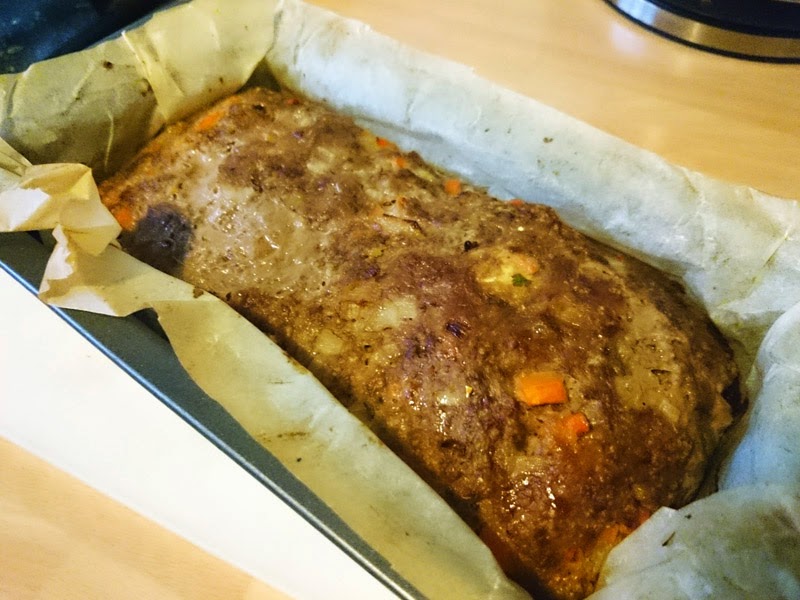

Serve with gravy or more authentically, a simple tomato sauce with greens and sautéed potatoes.


Share
Tweet
Pin
Share
No comments

We're slap bang in the middle of a fashion for ever increasingly complex food where everything needs to be processed and bothered with sodium alginate, maltodextrin or methyl cellulose powder to impress us. But I find myself craving simplicity more and more.

Admittedly there is something admirable about the skill and techniques used by leading chefs to dehydrate, sphere and transform everyday foods into something unrecognisable, but for me, the real talent of cooking comes from turning a handful of simple ingredients into something delicious. Mammas of Italy have been doing this for centuries, and cucina povera is something that Italy still celebrates. It's the ultimate respect of food, be it the humble tomato or a piece of guanciale.

Risi and Bisi isn't actually from my region (Abruzzo), but a dish from Venice. But nine times out of ten, if I'm home alone, I'll be cooking this for myself. Essentially it's the Italian equivalent of rice and peas, a little like risotto but far soupier.  As with all simple recipes, they are made better by great quality so the recipe lists some pointers to make it really special.

Either way, I'd generally rather have a plate of this than a dish of dehydrated mackerel cheeks with popcorn powder.

Serves 4

2tbs Olive oil
Small white onion, chopped finely
1 clove of garlic, crushed
60g of pancetta, cut into small cubes (not too much of the fat)
400g peas, frozen is fine but freshly shelled is best when in season
200g of rice, vialone nano, aborio or carneroli
Few stalks of flat leaf parsley, chopped finely
1ltr chicken stock, best you can
Parmigiano Reggiano

Heat the olive oil in a saucepan and gently fry the onion until slightly transparent and without colour.
Add the pancetta and fry for 2-3 minutes. Add the peas, garlic, rice and parsley and fry again for 1-2 minutes until well coated. 

Add the hot stock and cook for 10-12 minutes, until the rice is tender. If the rice absorbs too much of the stock just add a little more boiling water, you want to retain a slightly soupy consistency. 

Season to taste with salt and freshly grated Parmesan, which will give the dish a slight creaminess.
Share
Tweet
Pin
Share
No comments

I absolutely loved my visit to Slindon pumpkin festival today, in the perfect Autumn weather. This is a very sweet festival that has been running since 1968 started by pumpkin grower extraordinaire, Ralph Upton. Now his son and a core team keep the event going, the centrepiece being a huge mural made up of different pumpkin varieties. 

There are over 50 varieties to buy, including perfect carving lanterns, tiny ornamental gourds and the gorgeous grey Crown Prince pumpkin that are the best for cooking with. 

We drove away with a car full of pumpkins so we'll be eating them well into 2015! 


The festival runs daily from September to November in Top Road Slindon, Arundel, Chichester, West Sussex BN18 0RP

http://slindonpumpkins.co.uk/
Share
Tweet
Pin
Share
No comments


There are people who adore haggis and those that don't appreciate it so much. And I'd hedge a bet that 70% of those in Camp No can't bare the idea of it rather than relate their dislike to the taste. Which is daft as these people are probably happy to trough down plates of cured meats, rare steaks and sausages by the truckload. When you think about it, haggis really isn't too far removed from those foods. It's just Scottish charcuterie if you like. An interesting point raised at a very special dinner organised by MacSsween Haggis I attended recently.

Luckily, I'm firmly in Camp Yes for haggis as there were six courses of the gorgeous stuff to get through, crafted by the wonderful Coal Shed. Haggis was incorporated into dishes that complemented the variety flavour, some of which are new Macsween products like Wild Boar, Venison, Three Bird and we even sampled an unusual Chocolate and Chilli Black Pudding. 

Each dish was washed down with not one, but two paired drinks (God bless the Scots). These were selected by Dave Broom who went for the expected whiskey, ale and wines, to the more unusual pairings of tequila and sherry. Some worked really well, others created conversation but that's what it's all about!

Neeps N’ Tatties Cappuccino with “Moroccan Spiced Haggis” Scones, Chicken Liver Mousse & Onion Jam. Paired with: Villa Maria Private Bin Riesling 2013.
Confit Chicken Thigh, Artichokes, Coffee, Bok Choi, Crispy “Traditional Haggis” & Chicken Consommé. This was brilliant paired with the Tio Pepe Fino Sherry, but I love sherry.   
Venison Carpaccio with “Venison Haggis” Scotch Egg, Celeriac, Blackberry, Seeds & Nuts. Paired with: Glenmorangie Quinta Ruban.
Smoked Quail & “Three Bird Haggis” Paté with Truffle Toast, Burnt Apple, Chestnuts & Grapes. Paired with Innis & Gunn Toasted Oak IPA and Don Julio Reposado, which I didn't get on with. Maybe tequila at this stage was a bit too full on!
“Chocolate, Chilli & Beetroot Black Pudding” Brownie with Whisky Baba, Raspberries, Black Sesame Seeds & Oatmeal. Particularly great with Havana Club 7 Year Rum but even better with the Sam Smith’s Taddy Porter.

We polished off the meal with Haggis Spiced Chocolate Truffles and a dessert wine. Generally the meal was great, as you would expect from The Coal Shed. I think they treated the haggis a little lightly but liked how each haggis variety was themed appropriately and opened my eyes to different processes in serving haggis. (Excuse the bad photos, the food was immaculate but the lighting suitably moody.)


The Macsween story is also rather lovely, celebrating their 60th anniversary but still firmly a family business. The original Macsween Haggis was created in the family butcher shop in the 50s to the grandfather's own recipe. This is why Macsween Haggis doesn't contain the expected liver, it's just that Charlie Macsween didn't like the taste – fair enough. Today, the company are championing the introduction of haggis to a wider audience and are doing it extremely well. Even the format of the packaging has been remodelled from a traditional stomach shape (this is still available in farm shops and butchers) to a more consumer-friendly sausage shape. Purists may balk but it's a smart move. They also offer haggis in quick cook packs and smaller serving formats too.

I was sent away with a bag groaning with Macsween products and a challenge to create some dishes, something I'm really looking forward to. Expect a post up soon, I'm thinking of giving it an Italian twist obviously!

www.macsween.co.uk

I was a guest of MacSween Haggis.
Share
Tweet
Pin
Share
No comments


I absolutely HATE hotels, so being "creative" with holiday accommodation, we've stayed in unusual choices from vintage steam railway carriages to huts on Zanzibar beach. But for our "luna di miele" I wanted something really special, so we stayed in, yes, a former ghost village. The obvious choice, I know.

Abruzzo, post-war, is formerly one of the poorest areas of Italy with whole villages being abandoned as people went in search of a better life. One of these crumbling villages was San Stefano di Sessanio. It now features a very interesting concept, the diffusion hotel, with rooms being scattered around the village in various buildings, with beautiful, rustic dilapidation surrounding them.


These buildings have been lovingly and sensitively restored, yet the essence and style (and blackened walls from centuries of soot) from that abandoned time retained, just with the addition of luxury bathrooms, hidden electricity and beautiful touches like handmade rosemary soap, hand blown modern glass lamps, ceramics from Castelli, saffron-dyed bedspreads and hand stuffed mattresses. Everything, as you may have guessed, is either an antique find or made by hand using long-forgotten methods and techniques.


The hotel features a communal cantina and Liquorificio in different buildings in the village. It also has a fantastic restaurant with only a set daily menu with no choices based on the historic Abruzzo cucina-povera ("cooking of the poor" or peasant cooking). Whereas the poor of that time would have been lucky with one plate of food, the meal offered follows the classic antipasto, soup, pasta primo, meat secondo and a dessert all with wine and liqueurs (50 euros). 50% of all the produce used in the kitchen is grown by the hotel, with a view to making it 100% self-sufficient in the near future. San Stefano di Sessano is famous for its tiny brown lentils, chickpeas and saffron, their USP being the mineral-rich mountain spring waters that naturally feed the crops, so it's a fantastic place for food.

Before we dig into the food, let's firstly have a look at the interior of the restaurant. At night it's really dark and moody with flickering amber candles. Amazing and hopelessly romantic! All of the plates are made and painted locally which was a nice touch.


The antipasto was a taster plate of little bits and pieces; a rather good zucchini omelette, a little roast potato, fresh (not the usual dried) pecorino... Gave me lots of ideas on how to spice up my antipasto at home from the usual items.


Minestra: Although not much to look at, especially with the dark lighting - hence the flash, this was an incredible dish of grano (much like farro) in red wine with lots of pecorino, some speck I believe, and a deep, intense stock. Gorgeous texture and rich flavour.


Pasta: Fettucini with ragu. Mr. Graphic Foodie commented on how al dente the pasta had been on this trip. Yup and I loved it. There was no Michelin* starred wafer-like nonsense with this plate of pasta. This was like my mum makes it. Thick, heavy and richly coated in sauce.


Secondo: These sausages were made by a local chap and we were very lucky indeed to sample them as he only delivers to the hotel every few weeks. They look like your average banger but the texture and flavour was very, very Italian as you will find them typically much denser, heavier and simply spiced. Oven roasting coarse sausages like this brings out the best in them. The roast potatoes with rosemary, swimming in glossy olive oil was the perfect accompaniment.


Italians are not famous for their desserts and in a cucina-povera, very few families would have had the luxury of a dessert. This nut tart however, was lovely and surprisingly light.

**Update** The chef on the night, Rosella Madonna, after seeing this post, has informed me via email that the nut tart was a recipe of her grandmothers, written on 23rd July 1914. Isn't that sweet?


The home-brewed liquors were brought out at the end of the meal, a common occurrence in this neck of the woods, my own family home-brew lots and just a few shots will render your legs useless. These ones luckily were rather more refined and were all the classic liquors of the region:


Genziana (the gold one): My dad swears by a shot of this after a really heavy meal to "aid" digestion. Made with the roots of a local herb.

Ratafia (the almost black one): A cherry liquor made with the fruit and leaves of the tree. A hit with the ladies - it's the local version of sherry.

Ortica (the green one): Made with stinging nettles and tastes like it too. Yerk.

The only one I didn't try (as I had to navigate the crumbling cobbles back to the room!) was the reddish one that I believe was Rosa Canina. This is made with rose hips.

So as you can see the restaurant is well worth seeking out, even if not staying at the hotel.


Breakfast is an event in itself. In yet another building, a banquet table awaits you lined with home baked crostatas, lingue di gatti, pastries, cakes, home made yoghurt, savoury pies, cured meats all served by the sweetest Italian woman you will ever meet in your life. Local honey, preserves and freshly baked bread are all laid out on your tables.


When you leave, as you hand back your 7 inch iron room key, they even give you a bottle of their olive oil. This is a real foodie paradise.

It is worth mentioning that sadly, the iconic tower in the top picture had fallen down in the recent L'Aquila earthquakes and we saw a lot of heartbreaking damage in the village and surrounding areas as well as the temporary accommodation chalets for local people whose homes have been destroyed. Abruzzo has never been like the manicured tourist areas of Italy but rugged and breathtakingly beautiful. The real deal. Although parts are now scaffolded up and restoration is in progress, the beauty of the region still shines through. The damage may still put off visitors but this area could do with as much money as possible from tourism. I say go and support it and see and taste what Italy is really about.


Sextantio Albergo Diffuso
Via Principe Umberto
67020 Santo Stefano di Sessanio AQ, Italia

Get Directions
www.sextantio.it

(You can read more about food travel in Italy at http://inghamsitaly.co.uk/blog/2014/march/04/a-foodies-guide-to-italy/ which also includes a little article I've written about regional food across Italy.)

*Although saying that, the head chef, Niko Romito, does own the Michelin starred Ristorante Reale in nearby Rivisondoli.
Share
Tweet
Pin
Share
8 comments
Welsh Food. I'll be honest, if I were a contestant on Family Fortunes and had to name another famous Welsh dish that wasn't the fancy cheese on toast thing, I'd be stumped and no doubt hearing the honk of the buzzer followed by the big red cross. Perfect then to be educated at a Welsh banquet, celebrating the national dishes in no other that Cardiff Castle, with the cooking executed by top chefs from the Welsh Food Association. Doesn't get Welsher than that.


But it's not just my ignorance to answer for my lack of Welsh food knowledge. The lovely ladies at Howell Food Consultancy, and ambassadors for Welsh food, with whom I was sat with at the dinner, explained that food has not historically been protected or even celebrated in the country, plus the Welsh aren't typically people who like to show off. There apparently isn't even such thing as an exclusively Welsh restaurant*, apart from maybe one in Cardiff but the name escapes me and Google fails me. Bonkers as they have the perfect climate for rearing animals and growing food as well as that coastline, so the produce is fantastic but what about dishes?

Anyway, back to the banquet food.

The starter was a celebration of that aforementioned shoreline; Anglesea Shellfish and Crab Jelly, Caerphilly Smoked Salmon and Spiced Penclacwydd Cockle Cake. It was delicious, in particular the smoked salmon, but I would have probably chosen something a little less contentious than jellied fish and cockles to win over the majority.


However, an all out real crowd-pleaser was the lamb from Irfon Valley. Lamb is the obvious choice on a Welsh menu and utterly enjoyable to boot, meltingly tender and stuffed with leeks, garlic and laverbread. My ignorance reared its ugly head again as I though lavarbread was some sort of er, bread. But it is infact seaweed (laver) that has been boiled and pureed (making it laverbread). It didn't really have much of a distinctive taste which I was expecting, but apparently is used as an excellent binding agent and eaten for breakfast with oats.

Worth mentioning was the Welsh wine too. Sadly I didn't catch the name (or even a glass) of the Welsh sparkling wine to start as I was to busy gawping at the castle interior, but really enjoyed the nicely balanced, light and refreshing white served with the fish starter which was the Cariad label from Llanerch Vineyard. The red, Glyndwr Red 2009, served with the main didn't quite hit the mark for me, it was fruity yet quite acidic and little fizzy actually!


Dessert was a Hazelnut and Chocolate tart with raspberry and orange compote. The Welsh element being the Merlyn cream liquer added to the chocolate. Very much like Baileys (but God forbid don't compare it to Baileys in Welsh company!), its alcohol comes from a different part of the whiskey distillery process than the big brand.


Next up were the cheeses; Celtic Promise, Hafod and Perl Las. All quite different and all worth a try if you come across it. The chutney accompaniment was, as one diner commented "like a slap from a Welshman that loves you really." I couldn't describe it any better.


Really, most of the food was showcasing fantastic Welsh produce rather than national dishes but we did end with one - Welsh Cakes! Served beautifully warm, I snarfed four of these little lovelies with my coffee.


The banquet, whilst to celebrate Welsh Food, was also to mark the finale of the latest Visit Wales campaign where they take Londoner Piers Bramhall on a "Proper Holiday" around Wales. If you haven't caught any of it on the telly, have a look here, it's a really great campaign: http://www.youtube.com/user/waleswantsyou


*Feel free to prove me wrong, I'm all ears and stomach.
Share
Tweet
Pin
Share
5 comments


Have you all been watching Two Greedy Italians on the BBC? Brilliant isn't it? Not just relying on the whimsical, lemon grove, rose-tinted view of Italian food culture, TGI also represents modern Italy. Although to be honest where I'm from in the country, it is still very food and family centric and women that can't cook are still frowned upon! But great to see Antonio and Gennaro celebrate and enjoy not only the food, but the real meaning of it within the culture there today. I particularly liked the residential drug rehabilitation centre set up to put youngsters back on track by teaching them skills such as cheese and wine making - trust the Italians to treat addictions with food creation! But it seems to be a really beneficial focus for these young people and you can see their genuine passion for their new found vocations.


Anyway, I was lucky to be sent the book ahead of the series to try out and I can honestly say it is as good as the televised series. There are plenty of fantastic, simple and humble recipes that have been loved by generations past and still made to this day. The vegetable in particular is celebrated with lots of simple contorni, or side dishes, that are stars in themselves. I adored the beans with fried breadcrumbs and pine nuts, that my dad tells me was the pasta topping for poor Italian families that couldn't afford Parmesan cheese! Delicious - Jamie Oliver does a fab cauliflower risotto that uses these fried breadcrumbs with chilli as a topping.


Recipes are interrupted by interesting cultural pieces on Italian regionalism, the north-south divide, cucina povera, religion, immigration and street food which help get an understanding of the origins of the Italian people and foods.


It was easy to cook plenty of dishes from this book as, being a greedy Italian myself, most of the ingredients were in my store cupboard anyway. So far I have tried seven dishes with plenty more bookmarked for the coming weeks like the braised greens and polenta cake, garlic soup and caramelised orange cake. The below were the tried and tested recipes, all of which were a success and ones I will be making again.

This is a must try, Fagiolini e Compagni " green beans and co", a divine topping of fried breadcrumbs and toasted pine nuts which really made the beans shine:


This rustic dish of chicken livers, porcini mushrooms and homemade Tajarin pasta was divine, with a good kick of Marsala:


Making the most of the British asparagus in this raw asparagus and Parmesan salad:


The sea bream with everything from the Med - lemons, olives, garlic, capers, anchovy, wine, tomatoes and herbs - made for a quick, light and tasty mid-week meal:


I shoved this chicken with artichokes, onions, potatoes and rosemary in the oven to feed a crowd of mates which went down a storm:


Carluccio seems to love the use of breadcrumbs and this was an ideal, healthy and quick version of breaded chicken. Stale bread was whizzed up with olives, sun-dried tomatoes and herbs and placed on top of some white fish. Delicious:


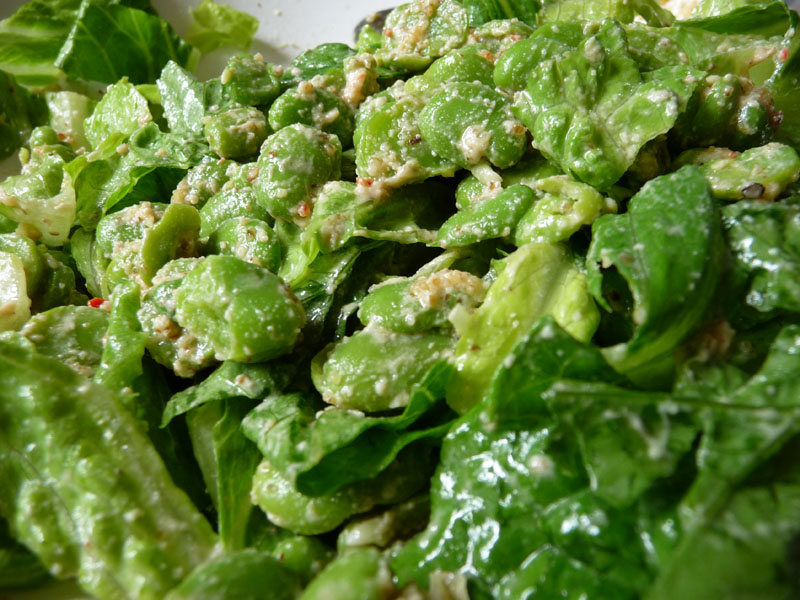
Finally this quick dish of broad beans with a walnut, garlic, chilli pesto was created as we waited for the pasta to boil:


Carluccio and Contaldo are from different regions and so recipes are represented from both, showing how diverse the food is in a place that has only existed as a united country for 150 years.

There are some of my Italian favourites as well as some new regional discoveries in these book that truly represents Italian cooking and is essential for anyone remotely interested in the cuisine or want to know a little more about the culture of this cuisine.

Essential for the cookbook shelf.

Two Greedy Italians by Antonio Carluccio and Gennaro Contaldo is published by Quadrille and costs £20.00.

Many thanks to Quadrille for this copy to review.
Share
Tweet
Pin
Share
12 comments
Older Posts

The Graphic Foodie

About Me

With a love of my home town, this blog lists frequently updated Brighton restaurant reviews for both Brightonians and visitors to navigate to all the best food spots in the city. Although the focus is on our fantastic local independent restaurants, you can also discover selected cafes, supper clubs and pop-up restaurants. In the mix are also my kitchen experiments and family recipes from the Abruzzo region of Italy, food-related design, product reviews and book recommendations.

Follow

  • instagram
  • twitter

Categories

review restaurant product pizza takeaway travel drink

recent posts

Blog Archive

Popular Posts

  • RECIPE: Red Velvet cake from the Hummingbird Bakery
    Ever since seeing the Armadillo wedding cake in the 1989 film Steel Magnolias, I have been slightly obsessed with the Southern United Stat...
  • RECIPE: Elderflower Cordial without Citric Acid
    If you are super quick and very lucky, you may just get the end of the elderflower season. I was randomly bimbling home along a pedestria...
  • PRODUCT REVIEW: Tefal Ingenio range
    For essentially a space saving pan system, I don't know why I was still amazed that the box the set came in was so small. Inside there...
  • GF Guides | The best and worst pizza in Brighton and Hove
    Another post banging on about pizza. Oh yes! And this one is going to be the growing mamma of all Brighton pizza reviews, so get comfort...

Created with by ThemeXpose